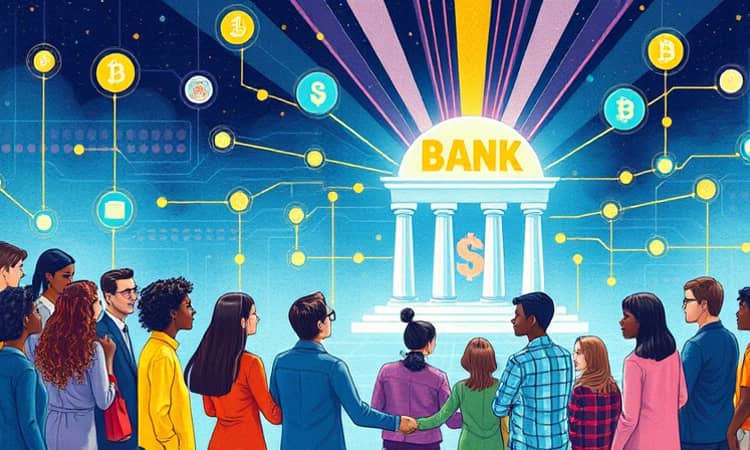
In an era defined by rapid digital innovation, the banking industry stands at a pivotal crossroads. Artificial intelligence is reshaping every facet of financial services, from credit approvals to fraud detection. As institutions race to adopt the latest AI solutions, they face critical questions about fairness, transparency, and accountability. This article explores how ethical AI can drive financial inclusion for all and secure public trust, while mitigating risks that threaten to undermine progress.
The Promise and Challenge of AI in Banking
AI’s potential to revolutionize banking is undeniable. By automating routine tasks, banks can reduce costs, accelerate decision making, and introduce novel products that were unthinkable a decade ago. In 2023 alone, financial institutions poured over $35 billion into AI technologies, laying the groundwork for an even larger investment by 2025.
Yet this promise comes hand in hand with serious challenges. Notable risks such as algorithmic bias, opaque “black box” decision-making, and data privacy breaches have triggered regulatory scrutiny and public concern. Striking the right balance between innovation and ethics is essential to ensure that AI delivers on its promise of fairer finance for everyone.
Ethical Challenges and Risks in AI-Driven Banking
As banks leverage AI to streamline operations and enhance customer experiences, several ethical pitfalls demand attention. These challenges encompass technical, legal, and societal dimensions, and each one can have profound consequences for both institutions and customers.
- Algorithmic bias in lending decisions: High-profile cases have exposed AI lending models that inadvertently discriminated against minorities and women, often due to biased historical data. Such outcomes can lead to unfair credit denials or inflated interest rates for vulnerable groups.
- “Black box” opacity: Many AI algorithms, especially deep learning models, are inherently difficult to interpret. Customers left in the dark about how their creditworthiness is evaluated may lose trust and face barriers to contest decisions.
- Data privacy and security: With around 80% of consumers worried about personal data misuse and 60% ready to switch banks over mishandled information, robust safeguards are non-negotiable. Regulations like GDPR and CCPA impose strict requirements on data handling.
- Over-surveillance and autonomy: AI-powered fraud detection systems can tread a fine line between protection and intrusion. Excessive monitoring can infringe on customer privacy, requiring ethical frameworks that respect civil liberties.
Core Principles of Ethical AI in Banking
To navigate these risks, leading banks have embraced a set of foundational principles. Embedding these values into every stage of AI development ensures that technology serves the broader good rather than narrow interests.
Adherence to these principles is not merely a regulatory checkbox. It is a strategic imperative that fosters trust, mitigates reputational risk, and unlocks new avenues for sustainable growth.
Regulatory Landscape and Governance
Global and regional authorities are swiftly crafting rules to shape AI’s future in banking. In Europe, the EU AI Act champions transparency, fairness, and harm prevention, while the Financial Conduct Authority in the UK emphasizes consumer protection. The Reserve Bank of India’s Digital Lending Guidelines mandate due diligence to prevent algorithmic bias.
Despite growing frameworks, significant gaps remain. The IMF reports that roughly 60% of banks lack clearly defined accountability rules for AI-driven decisions. To bridge this divide, many institutions are establishing dedicated AI ethics committees and appointing chief AI ethics officers. These governance bodies facilitate cross-functional collaboration between data scientists, legal experts, and ethicists, ensuring that technology deployments align with public interest and social values.
Use Cases and Opportunities for Ethical AI
When implemented responsibly, AI unlocks transformative opportunities across the banking sector. From saving costs to empowering users, ethical AI can reshape both back-office operations and customer-facing services.
- Fraud detection and prevention: AI-driven solutions are projected to save banks over $217 billion by 2025, while reducing false positives and improving customer experience.
- Credit risk analysis and fair lending: Enhanced risk modeling can broaden access to credit, provided models are continuously tested for discriminatory patterns.
- Personalized banking and virtual assistants: 24/7 chatbots and tailored financial advice boost customer engagement without compromising data security.
- Compliance monitoring: Automated regulatory checks accelerate reporting, minimize human error, and maintain audit readiness.
- ESG integration: AI tools now analyze environmental, social, and governance factors, steering investments toward responsible projects.
- Robo-advisors and autonomous finance: Ethical guardrails ensure that algorithmic financial advice aligns with individual goals and broader societal benefits.
Best Practices and Recommendations
Embedding ethical AI into banking operations requires deliberate action at every stage:
1. Adopt inclusive data selection practices: Ensure datasets reflect diverse demographics to minimize bias. Collaborate with external experts to validate sampling methodologies.
2. Invest in Explainable AI frameworks: Tools such as SHAP values, LIME, and transparent model prototypes help demystify complex algorithms for stakeholders.
3. Empower customer autonomy: Implement clear processes for customers to contest AI-driven decisions, and provide opt-out options for high-stakes automated services.
4. Conduct regular model audits: Establish periodic review cycles to verify fairness, privacy compliance, and alignment with defined ethical guidelines.
5. Foster cross-functional governance: Bring together ethicists, legal advisors, business leaders, and technologists to oversee AI initiatives from inception to deployment.
Case Studies and Impactful Numbers
Quantitative evidence underscores the urgency and potential of ethical AI in finance:
- According to Juniper Research, fraud prevention powered by AI will save the banking sector an estimated $217 billion by 2025.
- The World Economic Forum predicts that AI and automation will create 12 million net new jobs in global finance by 2025, outpacing displacement.
- An IBM survey reveals that 80% of consumers care deeply about data privacy, and 60% would consider switching banks if their information were mishandled.
- The IMF highlights that 60% of banks lack concrete accountability frameworks for AI decisions, signaling a critical governance gap.
Future Trends and Social Impacts
Looking ahead, ethical AI in banking will be shaped by evolving technologies, shifting regulations, and changing societal expectations. Smart contracts on blockchain networks, agentic AI capable of independent decision making, and real-time risk scoring are on the horizon. Each innovation brings potential for higher efficiency and deeper insights, but also demands stronger guardrails to prevent misuse.
Ethical AI also plays a pivotal role in advancing financial inclusion. By designing algorithms that accurately assess creditworthiness beyond traditional metrics, banks can extend services to unbanked and underbanked populations. This leap forward requires intentional design choices, community engagement, and ongoing evaluation to ensure that technology bridges divides instead of widening them.
Key Ethical Questions for the Industry
This journey prompts fundamental questions that each stakeholder must address:
- How do we guarantee fairness for all, beyond mere statistical accuracy?
- What mechanisms ensure customers can understand and contest AI decisions?
- Who bears responsibility when AI systems err, and how is accountability enforced?
- How should banks balance robust fraud prevention with respect for individual privacy?
- In what ways can AI be harnessed to support environmental and social governance objectives?
Ethical AI in banking is not an abstract ideal; it is a tangible roadmap for building a more just, transparent, and inclusive financial system. By embracing core principles, engaging regulators, and centering human values, banks can harness AI to serve society rather than undermine it. The time to act is now. Through collaboration and unwavering commitment to ethics, we can ensure that the next era of banking benefits everyone, leaving no one behind.