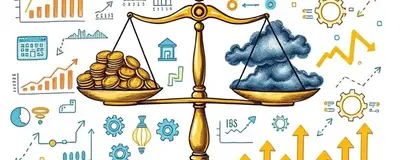
As 2025 unfolds, investors and businesses face a complex tapestry of opportunities and risks. Understanding cross-border trends is essential to thrive.
The Global Macro Landscape
The global monetary cycle has shifted significantly. In many developed economies, central banks are poised to begin an extended monetary easing cycle unlocking growth as inflation aligns with targets. This backdrop supports a favorable environment for both equities and bonds.
Equity markets outside the U.S. offer compelling forecasts: global equities (ex-U.S., unhedged) could generate annualized returns between 6.9% and 8.9%, while developed markets equities (ex-U.S.) may yield 7.3% to 9.3%. Emerging market equities carry higher volatility but promise 5.2%–7.2% annualized returns.
In the bond market, hedged global ex-U.S. bonds are expected to return 4.3%–5.3%. Persistently elevated U.S. yields, forecast at around 4% across the curve, reflect supply-side tailwinds and sticky inflation expectations. These dynamics create a diversified cross-border investment strategies landscape, blending income and growth.
Navigating Trade Currents
Global trade expanded by nearly $500 billion in the first half of 2025, powered by goods and services alike. Manufacturing sectors such as electronics and electric vehicles remain at the forefront, while services trade rebounds strongly.
- Goods trade growth: 2%–2.5% per quarter
- Services trade surge: approximately 4% per quarter
- Annual expansion: about 5% for goods, and 6% for services
Shifts in U.S. trade policy and narrowing imbalances in China and the EU suggest a more sustainable equilibrium. Export surpluses have moderated, while deficits in Japan, India, and the U.K. highlight fresh avenues for exporters.
Sectoral Frontiers and Innovation
Manufacturing continues to evolve around green technologies. Demand for renewable-energy components and electric vehicle parts is surging, driven by ambitious net-zero goals and cross-industry partnerships.
The services landscape, especially digital finance, logistics, and tourism, presents robust digital and financial integration opportunities. Private equity and venture capital are pivoting towards sustainability and sustainable carbon trading and climate tech, blending profit with purpose.
Managing Risks and Uncertainties
Geopolitical tensions—US-China trade frictions, Middle East instability, and lingering Ukraine conflict—continue to inject volatility into supply chains and risk premiums. Investors must monitor developments closely and adapt allocations dynamically.
Financial stability risks persist: high sovereign debt levels, the rise of nonbank financial institutions, and potential market corrections could amplify stress. Currency markets, though liquid, can turn sharply in response to macro shocks, underscoring the need for harmonized international regulatory frameworks and scenario planning.
Regional Highlights and Forecasts
Regional growth patterns vary, offering distinct entry points. The United States benefits from strong productivity and labor markets, while Europe lags slightly with projected growth below its long-term average. Emerging markets, led by Korea and parts of East Asia, have outperformed but carry higher volatility.
This regional snapshot illuminates where capital can be deployed to capture both yield and appreciation, while balancing risk.
Strategies for Cross-Border Success
To seize opportunities, investors and businesses should adopt multi-pronged approaches. Digitization and technology integration offer pathways to scale rapidly across borders, as regulatory frameworks converge.
- Leverage fintech and AI to streamline cross-border transactions
- Partner with local firms for market insights and distribution
- Prioritize sustainability-linked investments and green bonds
- Utilize trade facilitation tools to minimize border friction
Embracing a structured framework for due diligence and risk management will empower decision-makers to navigate flux while capturing long-term gains. Building resilient supply chains and untapped emerging market opportunities can differentiate leaders.
Conclusion: Charting the Path Forward
Global markets in 2025 present a rich mosaic of potential. From monetary easing offshore to robust trade expansion, the environment favors those who pair strategic vision with rigorous execution.
By aligning with sustainability goals, harnessing technological innovation, and fostering international collaboration, investors and businesses can transform challenges into triumphs. The journey across borders is not merely transactional—it is a testament to human ingenuity and shared prosperity.