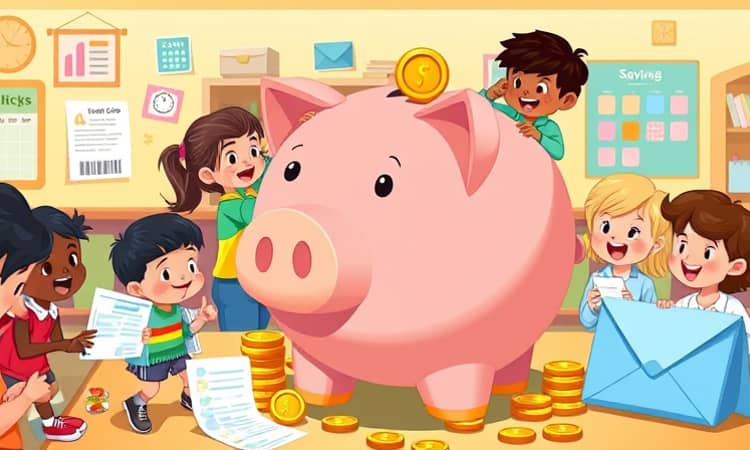
Introducing children to money concepts from an early age lays the groundwork for lifelong financial well-being. When families and schools work together, young minds gain essential skills for future success.
The Importance of Early Financial Education
Numerous studies show that starting financial education in childhood leads to economic empowerment in adulthood. Children taught about money early develop responsible financial habits and make smarter decisions later in life.
Financial literacy programs in schools not only benefit students but also create a positive ripple effect on families and communities. When kids learn to budget, save, and spend wisely, they bring those lessons home, influencing parents and siblings.
Developmental Milestones in Money Understanding
As children grow, their comprehension of money evolves. Tailoring lessons to each stage maximizes engagement and retention.
Each stage builds on the last. Preschoolers learn through play, while older children benefit from real-world tasks like shopping and digital tools that illustrate abstract concepts.
Key Principles to Teach About Money
Successful financial education covers fundamental principles that children can apply immediately.
- Recognizing coins and bills and assigning value
- Understanding spending vs. saving through jars or envelopes
- Differentiating needs from wants with real-life examples
- Introducing budgeting tools like tangible budgeting techniques like envelopes
- Encouraging earning through chores or small entrepreneurial efforts
When concepts are concrete—when children see their savings grow in a clear jar—they grasp abstract ideas more readily.
Practical Strategies for Teaching Money Skills
Hands-on activities turn theory into practice. Here are proven methods to make lessons memorable and effective:
- Coin scavenger hunts: hide coins around the house and ask kids to count and sort them.
- Envelope budgeting: use color-coded envelopes labeled save, spend, share to distribute allowance money.
- Grocery shopping games: compare prices, calculate totals, and discuss choices at the store.
- Digital apps and interactive videos: engage older children with tech-based budgeting simulations.
- Savings jars or child-friendly bank accounts: visualize progress toward specific goals.
By integrating these strategies into daily routines, parents and educators reinforce lessons naturally.
Parental Role Modeling and Family Engagement
Children absorb habits by watching adults. When parents discuss budgeting decisions, compare prices, or plan family finances, kids internalize open discussions about money.
Encouraging teenagers to manage part of the family budget—such as buying their own school supplies—builds confidence in financial decision-making. Involving children in goal-setting conversations creates shared responsibility and accountability.
Funding and Societal Impact
Investment in financial education yields measurable returns. In the United States, a 10% increase in per-pupil spending for 12 years results in nearly a 10% boost in adult wages and a significant rise in graduation rates.
Globally, disparities remain stark. Low-income countries have up to 36% of school-aged children out of school, underscoring the need for targeted policy and community initiatives.
Addressing Global Challenges
Worldwide, 272 million children are out of school. In low-income regions, limited access to education exacerbates financial illiteracy, perpetuating cycles of poverty. To close these gaps, stakeholders must:
- Expand funding for early childhood programs in underfunded areas.
- Integrate financial literacy into core curricula from preschool onward.
- Support community-driven interventions like reading and money clubs.
Collaborative efforts among governments, NGOs, and families can transform these statistics, creating pathways out of poverty and toward thriving economies.
A Call to Action for Families and Educators
Empowering children with money knowledge is a collective responsibility. Parents can start by introducing simple concepts at home, while educators incorporate structured lessons in classrooms. Policymakers must ensure equitable funding and accessible resources for all communities.
By dedicating time, creativity, and resources to financial education, we equip the next generation to navigate an increasingly complex economic landscape with confidence and resilience.
Together, we can transform “Kids and Cash” from a catchy title into a vibrant movement, where every child grows up understanding the value of money and the power they hold to shape their own future.