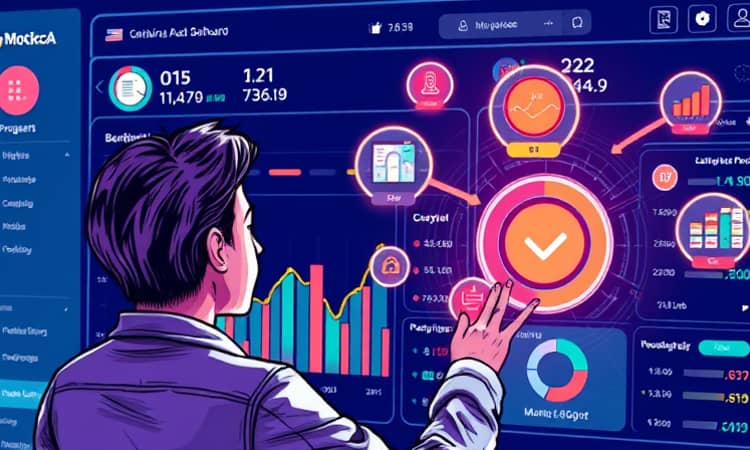
In 2025, the banking landscape is undergoing a profound transformation driven by artificial intelligence. Customers no longer settle for generic statements; they demand real-time financial insights that align with their personal goals.
Against this backdrop, financial institutions are leveraging AI to craft every digital interaction, ensuring each customer feels uniquely supported and empowered.
The Shift to AI-Driven Micro-Personalization
The move from mass-market tactics to ultra-targeted customer journeys has redefined how we think about banking. Instead of waiting for customers to react, AI systems now anticipate needs and deliver solutions before issues arise.
By continuously analyzing transaction patterns and contextual data, banks can nudge users away from overdrafts, suggest savings opportunities, or highlight investment options exactly when they’re most relevant.
Ultimately, this evolution underscores a critical truth: banking is no longer just transactional—it’s relational, with AI serving as a trusted financial companion through every stage of life.
How AI Personalizes the Digital Bank Account
Modern digital bank accounts are infused with AI engines that monitor spending, detect life events, and tailor advice continuously. Customers enjoy a dynamic experience where recommendations adapt to their behavior in the moment.
- Real-time analytics offering customized budgeting advice
- Predictive models identifying upcoming events like weddings or education expenses
- Machine learning algorithms refining journeys across mobile and web platforms
These capabilities translate into a seamless, proactive banking relationship where each update feels hand-crafted for the individual user.
Hyper-Personalization in Practice
Leading banks are embedding AI into every digital touchpoint. Push notifications driven by predictive analytics achieve up to seven times higher engagement than generic messages. Chatbots, powered by generative AI, resolve queries and suggest products with human-like nuance.
For example, BMO’s next-generation virtual assistant not only answers balance inquiries but also predicts upcoming bills, nudges users to build emergency funds, and even arranges one-on-one video consultations with financial experts when needed.
This level of integration is the hallmark of a holistic financial wellness ecosystem—one that merges banking, lifestyle, and health data to foster comprehensive well-being.
Operational and Business Impact
The shift to AI-driven services delivers significant returns across operational and financial metrics. Banks report a 25% improvement in customer satisfaction scores and a 20–30% rise in cross-selling success, thanks to precise targeting.
Costs decline as self-service channels handle routine inquiries, reducing call center loads by up to 40%. Meanwhile, personalized product offers drive higher average revenue per user, strengthening long-term loyalty and profitability.
Ultimately, institutions that embrace AI are witnessing dramatic improvements in retention rates and a measurable boost in campaign ROI.
Technology Enablers and Innovations
At the core of this revolution are cloud-native platforms and unified customer data systems. These infrastructures support continuous machine learning model retraining, ensuring recommendations evolve alongside customer behaviors.
As quantum processors mature, banks will unlock unprecedented computational power to deliver hyper-contextual advice in milliseconds, further elevating the customer experience.
Regional Adoption & Consumer Mindset
North America leads with 70% of banks deploying advanced AI solutions, while Europe follows at 60% and Asia at 40%. Yet global momentum is undeniable as institutions race to meet rising consumer expectations.
Today, 76% of customers say they prefer brands offering personalized interactions. Those figures reflect a fundamental shift: banking customers now view personalization as a baseline requirement, not a premium feature.
Financial leaders who fail to prioritize AI-led engagement risk eroding market share and facing declining return on assets as consumer loyalty gravitates toward more responsive competitors.
Case Examples and Future Outlook
Real-world successes speak volumes. JPMorgan Chase achieved a 25% uplift in satisfaction by integrating AI-driven alerts. HSBC boosted cross-sell revenues by 20–30% through predictive offers, and Barclays saw a sevenfold surge in push notification engagement.
Looking ahead, the convergence of AI with lifestyle and health data promises to create next-generation well-being platforms that coach users toward smarter habits, offering personalized fitness, nutrition, and spending recommendations in a unified app experience.
By the late 2020s, “always-on” personalization—powered by distributed edge AI and real-time quantum analytics—will redefine the standard for digital banking. Financial institutions that embrace this wave will not only serve customers more effectively but also foster deeper, more lasting relationships.
AI is transforming your digital bank account from a static ledger into a dynamic partner, guiding every penny toward your goals. The era of generic banking is over. Welcome to truly personalized financial empowerment.