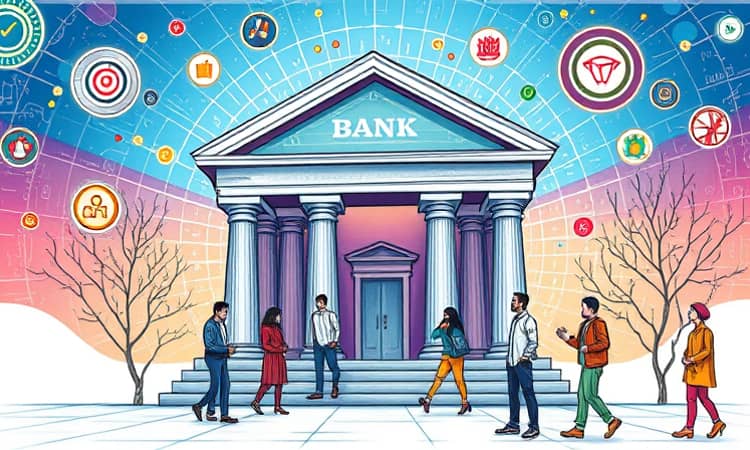
Financial services are undergoing a profound transformation as institutions leverage data-driven strategies to anticipate customer needs. Predictive banking promises not only efficiency and risk reduction, but also a more personalized and proactive customer experience.
By harnessing advanced analytics, banks can move beyond reactive service delivery to a model that forecasts and fulfills emerging financial requirements.
Understanding Predictive Banking
Predictive banking, sometimes referred to as anticipatory banking, uses data, statistical algorithms, and machine learning to forecast future outcomes based on historical and real-time data. Rather than simply explaining past trends, it enables institutions to predict customer behaviors, credit risks, and potential fraud before these events unfold.
At its core, predictive banking integrates transactions, mobile app interactions, CRM records, and even social media signals. By analyzing hundreds of variables, banks can anticipate when a customer might need a loan, detect anomalies indicative of fraud, or identify churn risks and address them proactively.
This approach contrasts sharply with traditional analytics, which focus primarily on generating reports and dashboards about what has already happened.
Market Growth and Adoption Trends
The global market size for predictive analytics in banking was valued at $1.20 billion in 2018 and is projected to reach $5.43 billion by 2026, representing a CAGR of 20.8%. Cloud-based deployments are growing even faster at a 22.6% CAGR as institutions seek scalable, cost-effective solutions.
Adoption of generative AI is rising dramatically. In 2024, only 8% of banks had begun tactical implementations. By 2025, 58% had fully integrated generative AI into at least one function, and 78% planned further expansion.
Industry surveys reveal that 96% of financial institutions intend to use AI within the next five years, and 81% anticipate major operational changes. McKinsey projects annual value generation from generative AI in banking at $200–340 billion.
Key Applications Transforming Banking
Predictive banking delivers measurable benefits across multiple domains. By analyzing voluminous data sets in real time, banks can anticipate risks and personalize offerings with unprecedented accuracy.
- Fraud detection and risk management: Models assign risk scores to each transaction, enabling immediate alerts. With U.S. transfer and payment fraud losses at $1.59 billion in 2022, predictive analytics drives significant cost savings.
- Customer experience and personalization: Algorithms analyze up to 50,000 behavioral tags to segment audiences, predict attrition, and automate targeted offers, boosting satisfaction and loyalty.
- Credit risk assessment and loan underwriting: Advanced models forecast creditworthiness, default probability, and payment behaviors, streamlining approvals and improving decision accuracy.
- Marketing, sales, and customer retention: AI-driven campaigns reveal prospects traditional methods miss. Capital Credit Union generated $14.7 million in auto loans and identified $2.6 million in home equity prospects within six months of deployment.
- Operational efficiency: From forecasting call center volumes to automating back-office workflows, predictive analytics reduces manual effort and optimizes resource allocation.
Technologies Powering Predictive Banking
Advanced machine learning models—such as neural networks, decision trees, and time series algorithms (AR, MA, ARIMA)—form the backbone of predictive banking platforms. These models retrain monthly or in real time to adapt to changing behaviors and market dynamics.
Explainable AI (XAI) frameworks are increasingly adopted to ensure algorithmic transparency and compliance with stringent regulations such as GDPR. By providing clear rationales for decisions, institutions can maintain customer trust and satisfy audit requirements.
Generative AI enhances predictive capabilities by synthesizing new data-driven insights, drafting personalized communications, and automating customer interactions through intelligent chatbots.
Implementation Challenges and Solutions
Despite clear benefits, banks must navigate several hurdles to implement predictive analytics successfully. Common challenges include:
- Data integration and quality: Aggregating clean, structured data from legacy core systems and digital channels.
- Talent gap: Recruiting and retaining skilled data scientists and AI specialists.
- Regulatory and ethical considerations: Ensuring fairness, preventing bias, and maintaining transparency in automated decisions.
- Implementation cost: Balancing upfront investments in infrastructure, software, and staff training.
- Cybersecurity risks: Protecting advanced analytics platforms from increasingly sophisticated threats.
Successful banks often adopt phased rollouts, partner with specialized vendors, and establish robust governance frameworks to manage risk and align with strategic goals.
Future Trends and Opportunities
As technology advances, predictive banking will evolve in exciting ways. Emerging trends include:
Hyper-personalization, where AI crafts offers and recommendations tailored to individual financial profiles and life events before customers even express a need.
Real-time anticipatory banking, with models analyzing streaming data to support on-the-fly decisions on lending, fraud prevention, and personalized advisories.
Integration into mobile and digital platforms, embedding predictive and generative AI directly into apps to deliver instant loan suggestions, payment forecasts, budget recommendations, and proactive alerts while customers are on the move.
AI-driven financial health tools that monitor spending patterns, suggest savings strategies, and automatically execute budgeting actions to improve long-term outcomes.
Real-World Impact and Case Studies
Across North America, Europe, and Asia-Pacific, leading banks are realizing substantial returns by embracing predictive banking. Top technology vendors—such as IBM, Microsoft, SAP, and SAS—offer turnkey solutions that streamline deployment and ongoing optimization.
Capital Credit Union’s success story demonstrates how regional institutions can compete with larger banks. By deploying Alkami’s predictive AI, they rapidly grew auto lending by $14.7 million and unlocked $2.6 million in home equity prospects, showcasing a powerful return on investment.
According to McKinsey, generative AI alone could generate between $200 billion and $340 billion in annual value for the global banking industry, illustrating the transformative potential of anticipatory banking strategies.
Conclusion
Predictive banking represents a strategic leap forward, merging data science, artificial intelligence, and customer-centric design. By forecasting future needs, institutions can reduce risk, optimize operations, and deliver truly personalized experiences that foster deeper relationships and loyalty.
As regulatory frameworks evolve and technology matures, banks that effectively harness predictive and generative AI will secure a decisive competitive advantage. For decision-makers, technologists, and customers alike, engaging with predictive banking today lays the foundation for a more secure, efficient, and personalized financial future.