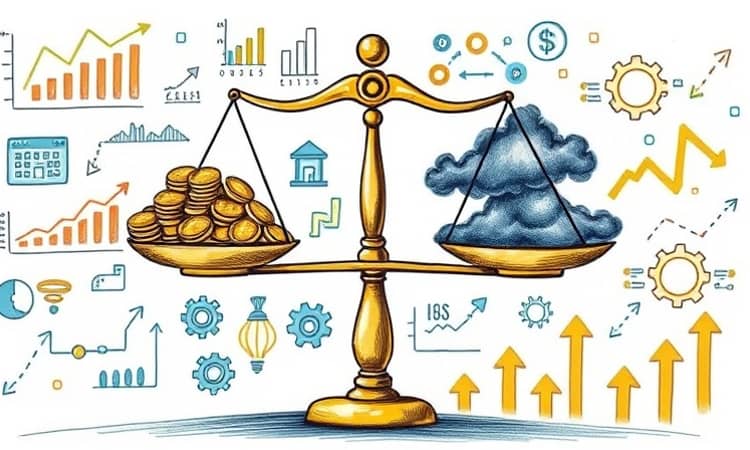
Effective decision making hinges on understanding both risk and reward. By weighing potential outcomes, leaders and individuals can make choices that align with their goals.
Fundamental Concepts of Risk and Reward
At its core, risk and reward analysis evaluates the possibility of loss against the potential for gain. Potential gains and losses shape every strategic move across finance, business, and personal contexts.
Risk is the chance of encountering negative outcomes due to uncertainty. Reward denotes the positive return or benefit when decisions succeed. Together, they form the foundation for strategic planning and resource allocation.
Analytical Framework for Evaluation
To structure analysis, organizations typically follow a multi-step framework that separates risk assessment, reward identification, and mitigation strategy development.
- Identify all conceivable risks, both internal and external.
- Evaluate likelihood and impact using qualitative and quantitative methods.
- Assign a risk level via a matrix categorizing probability and severity.
Reward assessment involves cataloging benefits such as revenue growth, market share expansion, and strategic positioning. Analysts then forecast probabilities and estimate magnitude through market research and financial modeling.
- Define desired outcomes and measure expected returns.
- Compare investment requirements against projected benefits.
- Prioritize rewards that best align with organizational objectives.
With risks and rewards mapped, decision-makers develop methodical risk mitigation strategies like avoidance, transfer, reduction, or acceptance to protect assets and maximize benefits.
Quantitative Metrics and Ratios
Numbers play a crucial role in comparing risk and reward. The risk-reward ratio quantifies potential gain against potential loss:
Risk-Reward Ratio = Potential Profit ÷ Potential Loss
Investors often target ratios above 1:2 or 1:3 to ensure the potential return substantially outweighs the possible setback. In trading, placing a stop-loss at $95 on a $100 stock aiming for $115 creates a 1:3 ratio.
Risk-adjusted returns, such as the Sharpe ratio or Sortino ratio, further refine analysis by relating excess returns to volatility or downside deviations.
Applications Across Industries
Risk and reward frameworks apply to:
- Strategic planning: Launching new products or entering markets requires weighing supply chain vulnerabilities against revenue growth.
- Investments and trading: Calculating entry and exit points based on expected returns and stop-loss triggers.
- Project evaluation: Determining if feasibility benefits outweigh development, regulatory, or operational risks.
- Change management: Assessing stakeholder acceptance versus potential organizational gains from transformation.
- Performance monitoring: Comparing actual outcomes against predicted risk-reward profiles to refine future strategies.
Methodologies and Best Practices
Organizations can enhance decision quality by adopting proven methodologies.
- Scenario planning: Model optimistic, pessimistic, and baseline cases to illuminate possible trajectories.
- Performance metrics: Leverage historical data and key performance indicators to set realistic thresholds.
- Continuous monitoring: Update risk and reward assessments as new information emerges or conditions change.
By integrating these steps into routine governance, companies maintain dynamic evaluation processes that adapt to evolving markets and internal shifts.
Real-World Examples and Trends
In the stock market, traders face volatility, corporate performance fluctuations, and macroeconomic events. Yet dividends and capital gains motivate long-term investors. Online platforms often demonstrate rapid risk and reward cycles during high-frequency trading.
Tech companies use risk-reward analysis in A/B testing, deciding sample sizes and significance levels only when expected benefits meaningfully surpass potential costs. In personal development, recovery programs employ similar frameworks to weigh the long-term benefits of sobriety against short-term difficulties.
Industry data highlights emerging patterns. Global unemployment is projected at 4.9% by 2025, the lowest since 1991, even as automation threatens 1.6 million jobs by 2030. Wage strategies reflect a balance: 52% of employers plan to increase payroll share by 2030, while only 8% anticipate lower wages. Inflation is forecast at 3.5% by late 2025. These figures underscore how macro trends feed into risk and reward calculations at all organizational levels.
Key Takeaways and Future Considerations
Successful risk-reward analysis demands clarity around objectives and a willingness to reassess assumptions. Most leaders seek a double or triple return to justify exposure, but context matters. High-stakes strategic bets can warrant greater risk if aligned with long-term vision.
Human factors also play a role. Cognitive risk perception biases like optimism bias or loss aversion can skew judgments. Embedding diverse perspectives and rigorous data analysis helps counteract these tendencies.
Ethical and environmental considerations add layers to evaluation. Assessing social impact, sustainability, and regulatory compliance broadens traditional financial frameworks and promotes responsible decision making. Technology, from artificial intelligence to cybersecurity measures, continually reshapes both risk landscapes and reward opportunities.
Ultimately, a balanced perspective on risk and reward empowers individuals and organizations to pursue growth confidently, safeguarding against undue losses while capturing valuable gains.