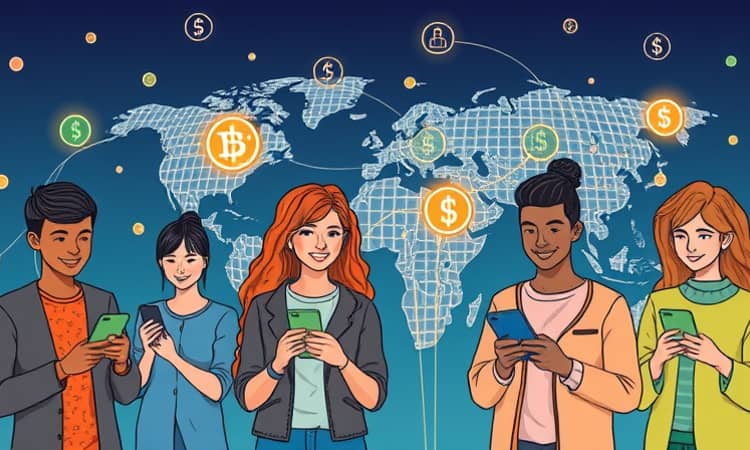
Imagine carrying a bank branch in your pocket—accessible 24/7, wherever you go, without ever stepping foot inside a traditional branch. This is the essence of the mobile money revolution, a journey that began in the early 2000s and has since reshaped how billions interact with financial services.
From humble beginnings with basic SMS-based transfers to today’s sophisticated smartphone apps, mobile money has become a beacon of hope for unbanked and underbanked populations worldwide. As we explore this transformation, we uncover the forces driving growth, the technologies fueling innovation, and the profound societal impact of banking in your pocket.
Market Size and Projections
The mobile money market has witnessed explosive growth in recent years. In 2024, the Global market valued at $14.1 billion, and analysts forecast it will be projected to reach $60.6 billion by 2030 at a compound annual growth rate (CAGR) of 27.5%. Other studies suggest the market could soar to $144.3 billion by 2035, reflecting sustained demand and innovation.
Transaction volumes underscore this boom: in 2024, GSMA reported $1.68 trillion across 108 billion transactions, while 2025 saw global transaction value hit $1.7 trillion, a 16% year-on-year rise. On the mobile banking side, the global market is set to grow from $4.1 billion in 2025 to $17.8 billion by 2035, driven by 2.17 billion app users worldwide and 72% of U.S. adults managing finances on their phones.
Segment Overview
Mobile money encompasses diverse services that cater to various financial needs. Today’s platforms seamlessly integrate payments, transfers, savings, and investments into a single digital ecosystem.
- Mobile Payments: Proximity and remote transactions via NFC and QR codes for everyday purchases.
- Mobile Money Transfer: peer-to-peer domestic and international remittances, vital for migrants, families, and small businesses.
- Mobile Banking: Account management, bill payments, loans, and digital investments through intuitive apps.
- Agent Networks: Physical touchpoints like M-PESA agents offering cash-in/cash-out services.
Drivers and Innovations
Several factors converge to accelerate the adoption of mobile money globally, transforming the financial landscape.
- Smartphone penetration: Rising ownership and mobile internet access bring services to remote regions.
- contactless payments and e-commerce marked a post-pandemic surge in digital transactions.
- financial inclusion for unbanked populations unlocks new economic opportunities for women, rural communities, and youth.
- biometric authentication and fraud detection bolster security and user trust.
- agent-based cash-in cash-out networks expand reach where digital infrastructure is limited.
Economic and Societal Impact
The ripple effects of mobile money extend far beyond convenience. In emerging markets, access to digital financial tools has:
• Boosted microenterprise growth by streamlining payments and bookkeeping.
• Enabled farmers to receive subsidies and sell produce with lower transaction costs.
• Improved access to education and healthcare payments, reducing administrative barriers.
By empowering individuals and small businesses, mobile money fosters resilience and drives economic development at the grassroots level.
Regional Analysis
Leading Platforms
M-PESA in Kenya remains the poster child of mobile money, leveraging a robust agent network to serve millions. In developed markets, Apple Pay and Google Pay drive contactless payments, while the U.S. FedNow Service processed 2.1 million instant payments in Q2 2025, up 62.7% from the previous quarter.
Emerging challengers include digital-only banks offering integrated wallets, lending, and investment services, further blurring the lines between banking and mobile money.
Adoption and User Trends
Mobile money’s user base is diverse and growing. In 2025, 34% of consumers engage with mobile banking daily, and 17% of users cite mobile features as a key factor in switching banks. Younger demographics, especially digital natives, demand seamless, app-based experiences, pushing legacy institutions to innovate or risk obsolescence.
Challenges and Limitations
Despite its promise, mobile money faces hurdles that must be addressed to sustain momentum.
- Regulatory fragmentation: Varying policies impede interoperability and cross-border transfers.
- Digital literacy gaps: Education and trust-building are essential in underserved communities.
- Data privacy concerns: Robust safeguards and transparent practices are critical.
- Agent liquidity management: Ensuring sufficient cash flow at local touchpoints remains complex.
Future Outlook
The road ahead for mobile money is paved with innovation. We can expect:
• Integration of savings, credit, and insurance into unified platforms.
• AI-driven personal finance tools offering tailored advice and risk assessment.
• Global interoperability frameworks facilitating seamless cross-border payments.
As mobile money ecosystems mature, they will increasingly resemble full-service digital banks, unlocking new revenue streams and user experiences.
Conclusion
The mobile money revolution is not just a technological marvel; it is a social movement that empowers individuals, drives economic inclusion, and redefines financial services on a global scale. By embracing these digital tools, users and businesses alike can harness unprecedented convenience, security, and opportunity.
Whether you’re a small-scale merchant in Nairobi, a gig worker in Mumbai, or a family managing expenses in New York, mobile money puts the power of a bank in your pocket. The future of finance is mobile, inclusive, and endlessly innovative—welcome to the new era of banking.