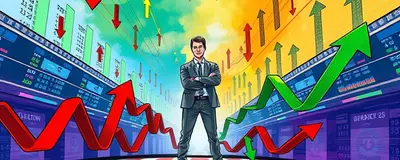
In the quest for financial success, investors often believe that markets respond only to data, analysis, and logic. Yet beneath every trade lies a complex interplay of emotions and cognitive shortcuts that steer decisions—often toward costly errors. Understanding these hidden forces is essential to transform gut reactions into disciplined strategies that withstand market turbulence.
Understanding Investment Biases
Investment biases are systematic deviations from rational decision-making caused by emotions or mental shortcuts. When fear or overconfidence takes hold, even experienced investors stray from their long-term goals. Behavioral finance, an interdisciplinary field combining economics and psychology, examines how these biases shape market movements and individual portfolios.
Biases act like distortions in the investment lens. What seems like an isolated choice is often the result of deeply ingrained patterns—patterns that can be identified, understood, and ultimately managed.
Major Biases That Impact Investors
While more than twenty biases have been catalogued by researchers, several stand out for their pervasiveness and impact. Recognizing these tendencies in yourself is the first step on the path to more objective decision-making.
This concise summary highlights how emotion and social influence can overturn even the most thorough research.
Psychological Mechanisms Behind Biases
At the core of biases lies fear of losses leads behavior known as loss aversion. Prospect Theory explains how people perceive a loss as more painful than a gain of equal size—for many, losses feel twice as bad as gains. Meanwhile, neuroeconomic studies reveal that the brain’s emotional centers light up during high-stakes decisions, triggering physical stress responses that cloud judgment.
Heuristics, or mental shortcuts, protect us from information overload but can introduce predictable errors when stakes are high. Under time pressure, investors resort to quick rules—like anchoring on the first price they see or favoring familiar companies—rather than conducting fresh analysis.
Consequences of Unchecked Biases
The stakes are not merely academic. Unchecked biases carry real costs:
- Lower Returns: Overtrading driven by overconfidence often incurs higher fees and underperformance.
- Increased Risk: Concentration in familiar assets exposes portfolios to idiosyncratic shocks.
- Emotional Toll: Regret and anxiety after poor decisions can paralyze future action.
Moreover, when large groups of investors succumb to the same bias, market-wide phenomena like bubbles and crashes emerge. Historic episodes—the Dot-com bubble or the 2008 crisis—illustrate how herd behavior and panic selling amplify losses.
Strategies to Mitigate Biases
Mercifully, biases are not immutable. Practical, structured approaches can restore objectivity and resilience to any portfolio.
- Writing an investment plan detailing clear objectives, risk limits, and diversification rules before entering any position.
- Using checklists or objective frameworks to assess every decision against predefined criteria, minimizing impulse trades.
- Regularly review and rebalance portfolios to counteract drift caused by market movements and personal biases.
- Seeking external accountability through financial advisors or peer groups to gain fresh perspectives and curb emotional trading.
Education and mindfulness also play a pivotal role. By studying behavioral pitfalls and journaling decisions, investors develop an awareness of their own cognitive patterns. Over time, conscious reflection transforms reactive impulses into deliberate choices.
Building a Bias-Resistant Portfolio
Diversification is more than a buzzword—it’s a powerful defense against familiarity and home biases. By spreading capital across geographies, asset classes, and sectors, investors limit the damage from localized downturns and emotional misjudgments.
Additionally, adopting systematic strategies—such as dollar-cost averaging or algorithmic rebalancing—reduces the temptation to time markets. Technology-driven solutions like robo-advisors increasingly incorporate behavioral nudges, subtly guiding investors back to their long-term plans when emotions threaten to hijack decisions.
Embracing a More Rational Future
Investment biases will never vanish entirely; they are part of our shared human wiring. But by shining a light on these hidden forces, each investor gains the power to choose differently—to transform instinctive reactions into disciplined decisions.
Ultimately, the psychology of profit is not just about maximized returns, but also about personal growth. Each avoided bias, each calm decision made under pressure, strengthens not only a portfolio but also the individual behind it. True financial mastery emerges when emotion and reason work in concert—when an investor learns to harness the best of both mind and heart.