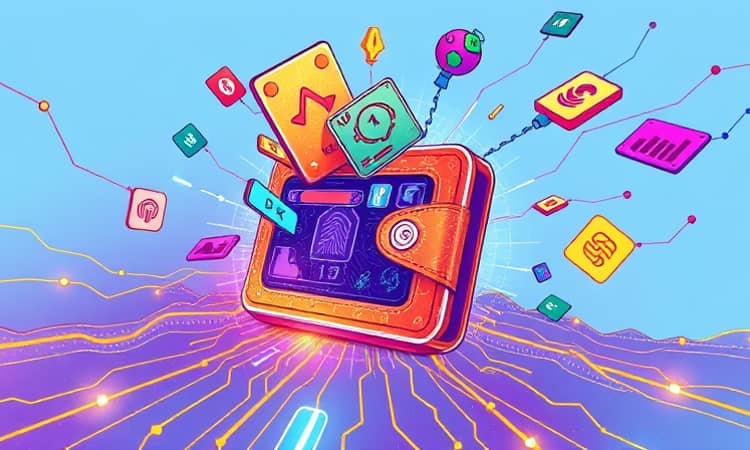
As financial ecosystems evolve at lightning speed, the humble wallet is undergoing a profound transformation. The shift from leather pockets to digital platforms is more than a convenience—it’s a revolution shaping the way we earn, save, and spend.
In this article, we explore the forces driving this change, the technologies at play, and the human stories behind the numbers.
Digital Banking’s Unprecedented Growth
By 2025, global digital banks are expected to produce a staggering $1.61 trillion in net interest income, and by 2029, that figure could swell to $2.09 trillion. Unprecedented growth in digital banking is no longer a buzzword—it’s a reality fueled by shifting consumer preferences and relentless innovation.
Consumer behavior underscores this trend: over 76% of Americans now use mobile banking apps, with 55% declaring mobile their primary banking channel in 2024. Daily app usage sits at 34%, while 42% of all users prefer mobile over web interfaces. Millennials lead the charge (80%), closely followed by Gen Z (72%) and Gen X (79%).
Satisfaction levels are off the charts: 96% of customers rate their digital experience as “good,” “very good,” or “excellent.” Across Australia, the UK, and the US, roughly two-thirds of consumers expect to complete every financial task on their phones, from loan applications to investment tracking.
Core Technologies Shaping a Seamless Experience
At the heart of this revolution lie powerful technologies that redefine convenience, security, and personalization.
Hyper-personalized financial services and advice emerge from AI and machine learning that analyze spending patterns, tailor investment recommendations, and offer real-time credit assessments for underserved customers. Fraud detection powered by AI can slash illicit transactions by up to 50%, safeguarding users without sacrificing speed.
Automation streamlines complex workflows, reducing operating costs by 20–40%. From instant loan approvals to automatic fund transfers, these efficiencies free financial teams to focus on strategic innovation rather than routine processes.
IoT and wearable solutions—smart ATMs, NFC-enabled devices, and biometric authentication—integrate banking into every moment of daily life. Imagine tapping a smartwatch to pay for groceries or scanning a fingerprint to access your virtual savings vault.
Open banking and embedded finance rely on robust APIs that let nonbank platforms offer banking services. Retailers, ride-share apps, and social networks can embed payment, lending, and investment features directly into their user experiences.
Meanwhile, distributed ledger technologies and tokenization experiment with next-gen transaction models: tokenized deposits, stablecoins, and blockchain-based platforms promise transparency, speed, and cross-border settlement without intermediaries.
Emerging Business Models and Competitive Dynamics
The competitive landscape is more dynamic than ever, with traditional banks, neobanks, fintechs, and Big Tech players all vying for a slice of your financial life.
Neobanks—digital-only institutions unburdened by legacy systems—offer streamlined, user-centric banking platforms that launch new features in weeks rather than years. Their lean structures enable lower fees and higher interest rates on deposits.
Fintech partnerships and “banking-as-a-service” models allow legacy banks to tap into external innovations while granting fintech startups regulated access to customer flows. Simultaneously, technology giants leverage vast user bases to introduce seamless payment, lending, and wealth management tools within existing apps.
- Neobanks: rapid feature deployment, niche targeting, minimal fees
- Fintechs and BaaS: modular services integrated into partner ecosystems
- Big Tech: embedded finance within social, retail, and communication platforms
This convergence is driving unprecedented collaboration and disruption, forcing incumbents to adapt funding, talent, and technology strategies at record pace.
Personalization, Empowerment, and the Human Touch
Beyond transactions, digital banking is evolving into a platform for financial empowerment. Mobile apps are becoming personal finance coaches, offering contextual advice, budgeting nudges, and automated savings plans based on individual behavior.
Imagine an app that detects a shift in your income, adjusts your monthly budget, suggests emergency fund goals, and even pre-approves a small loan for a planned purchase—all in real time. This is the promise of lifetime banking, where services adapt seamlessly from college tuition to retirement planning.
Customers crave this blend of technology and empathy. While algorithms power insights, human-centric design ensures accessibility, clarity, and trust at every interaction.
Regulatory, Security, and Inclusivity Considerations
Innovation must be balanced with robust risk management. Regulators worldwide, including the Basel Committee, are updating frameworks to address new digital risks, cloud adoption, and open banking standards.
AML (Anti-Money Laundering) and KYC (Know Your Customer) processes are being enhanced with verifiable digital credentials and smart contracts to streamline onboarding while maintaining compliance.
However, digital divides persist. Rural areas, older demographics, and underserved communities may lack access to reliable internet or digital literacy. Financial institutions must design for inclusivity—offering simplified interfaces, multilingual support, and hybrid models that blend digital with occasional human assistance.
Charting the Path Forward: Opportunities and Challenges
The horizon of digital banking is vast, full of promise and complexity. On one hand, personalized, real-time services can elevate financial health for millions. On the other, privacy concerns, cyber threats, and regulatory shifts will demand constant attention.
For consumers, embracing digital tools means greater control, deeper insights, and uninterrupted access to capital. For institutions, the imperative is clear: innovate relentlessly, partner wisely, and uphold the highest standards of security and inclusivity.
As your wallet morphs into a smart, interconnected hub, remember that the core of finance remains human. The most successful digital banking experiences will blend cutting-edge technology with genuine empathy, empowering individuals to live richer, more secure lives.
In this new horizon, your wallet is more than a place to store money; it is a gateway to financial wellness, empowerment, and global connectivity. Embrace the change—your future self will thank you.